
The fallout from Sunday’s West Tyres Mayo Stages Rally has left the Irish rallying community divided, with the decision-making process during the final loop becoming a hot topic for debate.
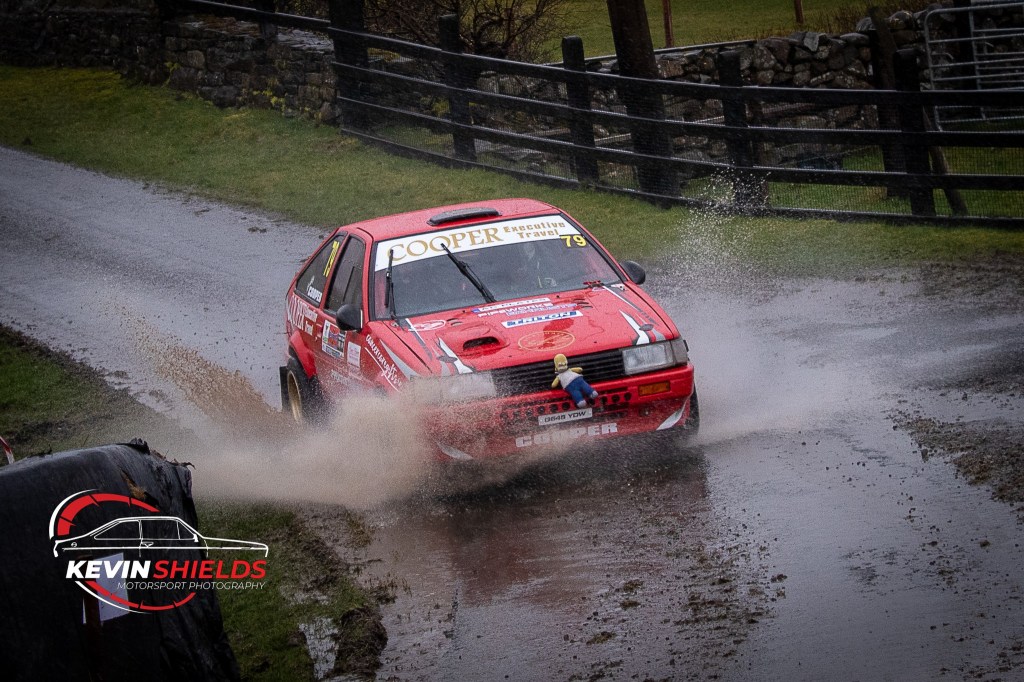
Kevin Shields photo shows what the conditions were like
In the eye of the storm is Josh Moffett, whose raw, emotionally charged comments at the end of Stage 8 have gone viral.
For a driver of Moffett’s professional stature, a man I have interviewed dozens of times without ever hearing him lose his cool, the use of expletives and his visible frustration signalled that something was fundamentally wrong in the cockpit.
The argument for pulling the pin at the midday service is a strong one.
By the time the cars reached Westport Quay, the weather had turned the lanes into rivers.
The consensus among the top 30 was almost unanimous: the rally should have been halted after Stage 6. Reports of “speedboats instead of rally cars” were common, and when a co-driver of Keith Moriarty’s immense experience describes conditions as the worst he has ever seen, the sport must listen.
We have been reminded too often lately, following tragedies in Clare and Killarney, that this is a sport where everyone needs to be able to go home on Sunday night.
When the crews arrived at the start of Stage 8, many were vocal about their reluctance to enter the test.
There is a strong case to be made that at that point, the organisers should have deferred to the collective experience of the frontline drivers. The fact that Declan Boyle went off the road less than five cars into that very stage, triggering a red flag, provides immediate evidence that the drivers’ fears were well-founded.
Furthermore, the interruption of Stage 8 skewed the results. Moffett, who had been quicker than Matthew Boyle all day, was penalised by the stage interruption rule, with the Donegal man benefiting from the time of Eddie Doherty, the last car through at speed. It created a situation where the sporting integrity of the podium was compromised by the very conditions the drivers had warned about.
However, there is an equally valid counter-argument that strikes at the heart of what rallying is.
It is, by definition, a challenge against the elements. Drivers are expected to adapt to the conditions provided.
While Moffett and others felt the risk was too high, they remained masters of their own destiny.
Daniel Cronin and Cal McCarthy proved this by making the individual decision to withdraw at the service halt to save their machinery for West Cork. They didn’t wait for a collective decision; they took responsibility for their own safety and equipment.
The difficulty for a Clerk of the Course is that they must manage an entry of 120 cars, not just the top five.
While a high-powered Rally2 car is a handful in standing water, the lower-powered cars at the back of the field, such as the Dacia runners, might have found the conditions perfectly manageable at lower speeds.
By the time the rally was curtailed, many in the lower classes were denied the mileage they had paid for. That sparks a separate debate on returned entry fees and championship scoring.
The top seeds, while influential, cannot be the sole arbiters of whether a rally proceeds; that responsibility rests with the officials who must consider every competitor on the list.
Ultimately, there are no easy answers.
The organisers were caught between the duty of care to the crews and the obligation to run an event for the entire field.
What is certain is that the dialogue between the drivers’ seats and the rally office needs to be clearer before the next time the heavens open
Just as newspapers and magazines are paid for, digital editorial content will also have to be paid for.
Please subscribe and help us keep this machine running!
It’s only €50 per year – subscribe now
Subscribe to get access
Read more of this content when you subscribe today.

 Kerry Motorsport News